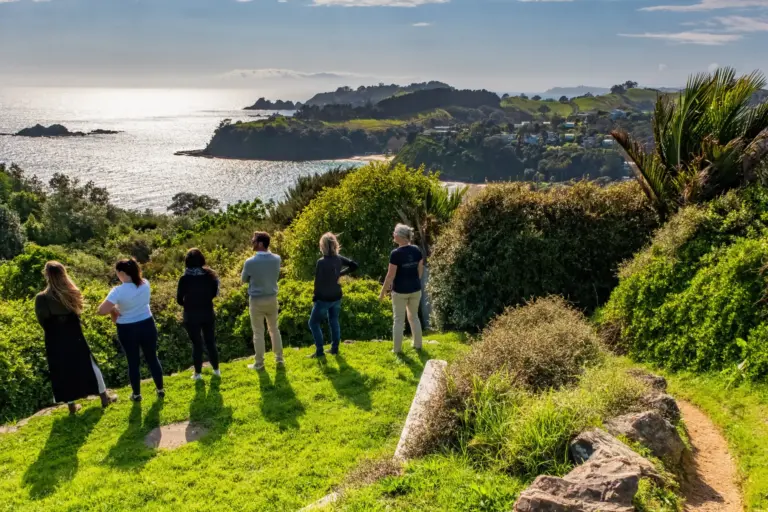
The birds of Waiheke Island are not to be missed, if you are interested in the unique native birdlife of Aotearoa, New Zealand. Birding on Waiheke provides an opportunity to see rare native species within easy reach of Auckland’s bustling CBD.
Birdlife on Waiheke
When you step off the ferry, there’s something you’ll immediately notice, the chorus of native birdsong coming from above. It’s a totally different environment to that of Auckland, and it shows, with bird sounds rivalling that of Aotearoa’s most well-protected national parks..
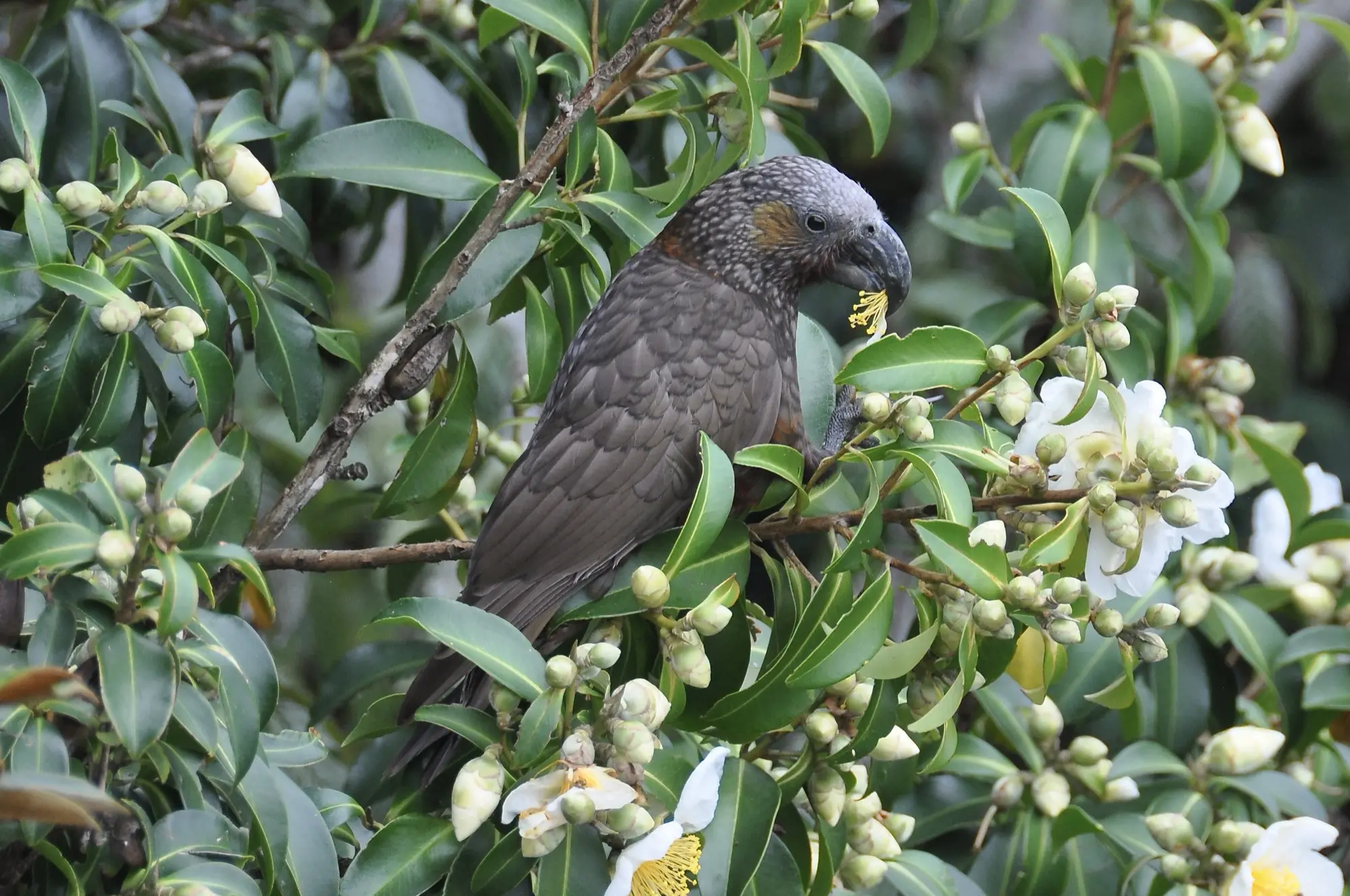
[link to Conservation Blog]Waiheke’s stalwart conservation ethos[/link] and a number of community-driven pest control and environmental safeguarding campaigns have led to a bird-boom on Waiheke, with the island transformed into a natural sanctuary. To put that into perspective, the 2025 annual Waiheke bird count saw a 99% increase in native birds counted since when put in the timef! Reintroduced species such as the Kākā parrot have seen an awesome 900% increase!
What makes Waiheke a unique place for birding?
Waiheke Island is a residential area and community home to over 9,000 people. It’s not a national park, or an official reserve. Yet on your morning walk to the shops you can spot any number of native birds you just can’t find in the city, which is only 35 minutes away! That mix of island life and thriving birdlife makes Waiheke one of the best birding getaways in the country. No long drives required.
See the Birds on Waiheke
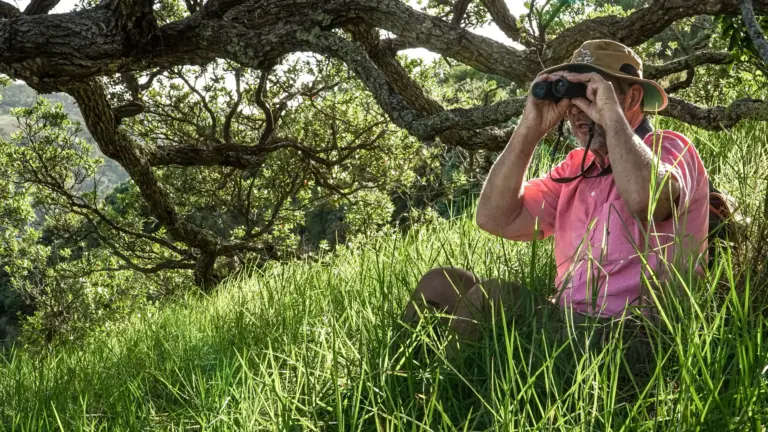
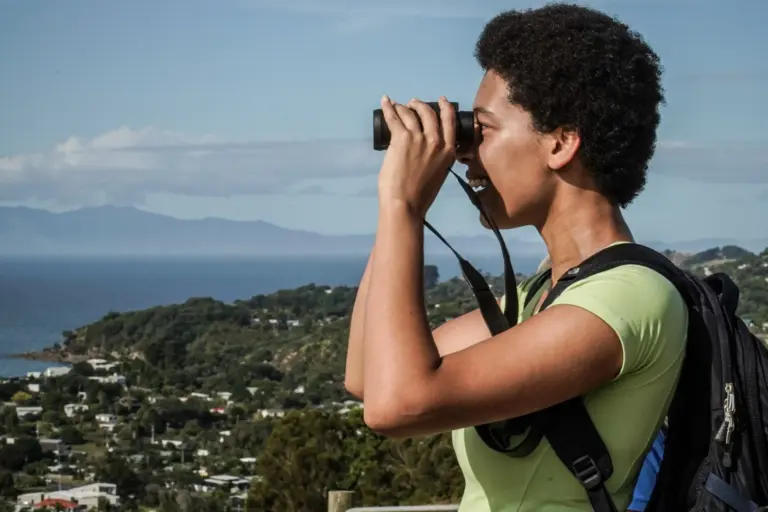
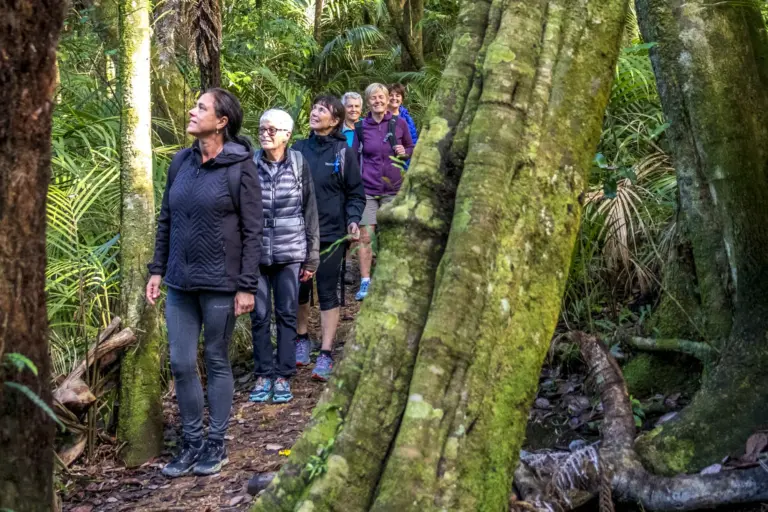
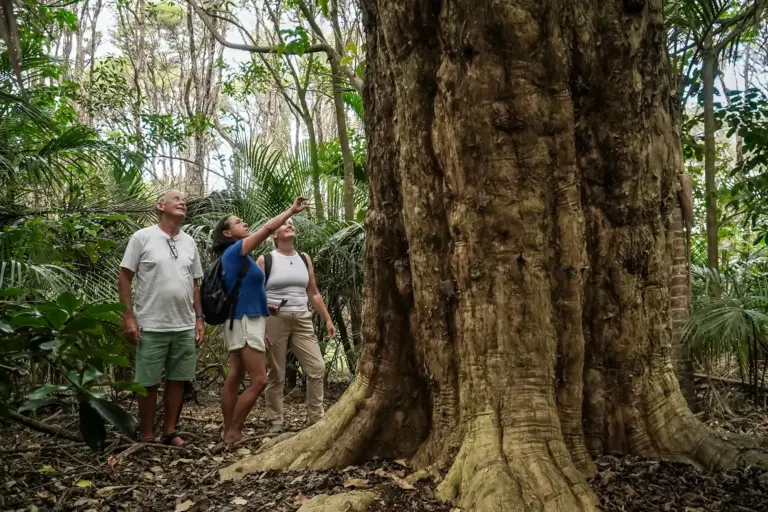
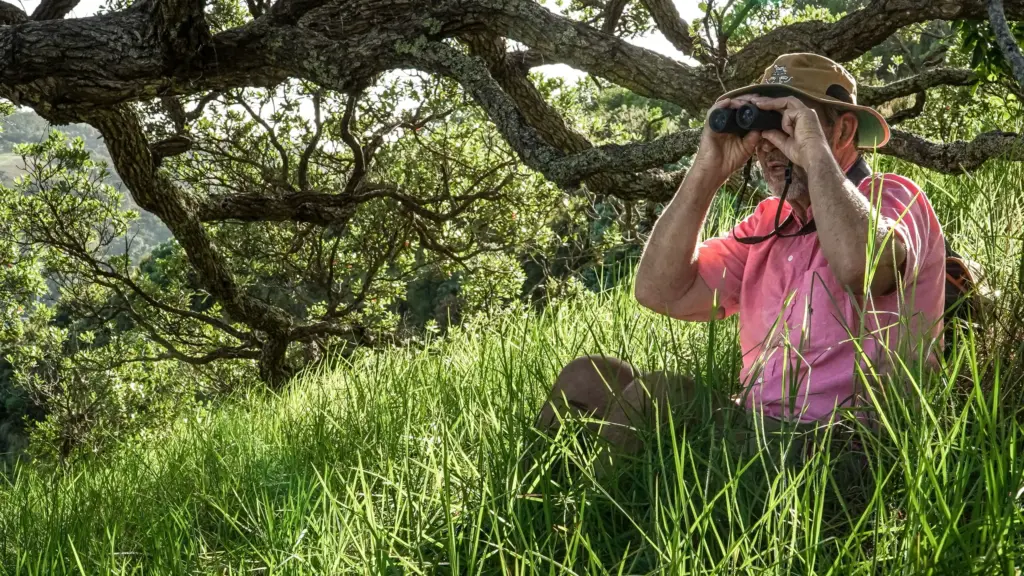
Waiheke’s birdlife continues to grow exponentially, and Terra & Tide offers a 3-hour private birding experience through some of the island’s gorgeous walking tracks. Our experienced guides know just the right places to see certain species, and birding binoculars will be provided so you can get a good look. Because the experience is completely private, you’ll have our guide’s full attention and can go at your own pace. You will be transported in our luxury Mercedes vans and can be picked up from Matiatia, the main Auckland ferry terminal, or your island accommodation.
Waiheke: A success story for birdlife
Waiheke wasn’t always teeming with birdlife. Before Europeans first arrived, birdlife was plentiful. But the process of colonisation, deforestation and the clearing of land for development drastically depleted the island’s environment and ecosystems. It wasn’t just the human element of colonisation that affected Waiheke and greater New Zealand’s flora and fauna. With settlers came European mammals, particularly rodents such as rats and stoats. Aotearoa’s large number of flightless birds, such as the kiwi, kākāpo, and weka, and their ground-dwelling nests, were left helpless, and soon populations were on the decline, some down to near extinction levels.
But, against the odds, an astonishing recovery has occurred. Waiheke’s geographic location as an island, combined with the brilliant efforts of conservation groups such as Te Korowai o Waiheke, first launched by the Waiheke Collective, a community effort made up of groups, businesses, organisations, and individual members of the public, have led to an environmental renaissance. For Waiheke, the end goal is a totally predator-free island, and that goal is getting closer and closer to fulfilment.
Currently, a major stoat eradication project is underway, predominantly using an extensive trap network, as well as a system for the public to report stoat sightings. Waiheke is also surrounded by predator-free islands in the Hauraki Gulf, which encourages population growth.
Seabird hotspot
Waiheke Island’s geographic makeup and the rich marine environment of the Hauraki Gulf create what’s called a major seabird superhighway. Conservation efforts have also turned the island into a safe haven, attracting more and more migratory and native birds to Waiheke’s cliffs and forests to roost.
On Terra & Tide’s birding tour, our guides know just the right places to spot them! Shorebirds are also plentiful, residing all over Waiheke’s coastline. Few places in the country let you see seabirds, shorebirds and forest birds easily in a single outing.
What native birds can you expect to see?
Just some of the birds you could see in Waiheke’s vibrant environment.
Forest and ground birds:
- Weweia / NZ Dabchick: A small diving waterbird recorded on Waiheke for the first time in recent bird counts, a promising sign of the island’s recovery.
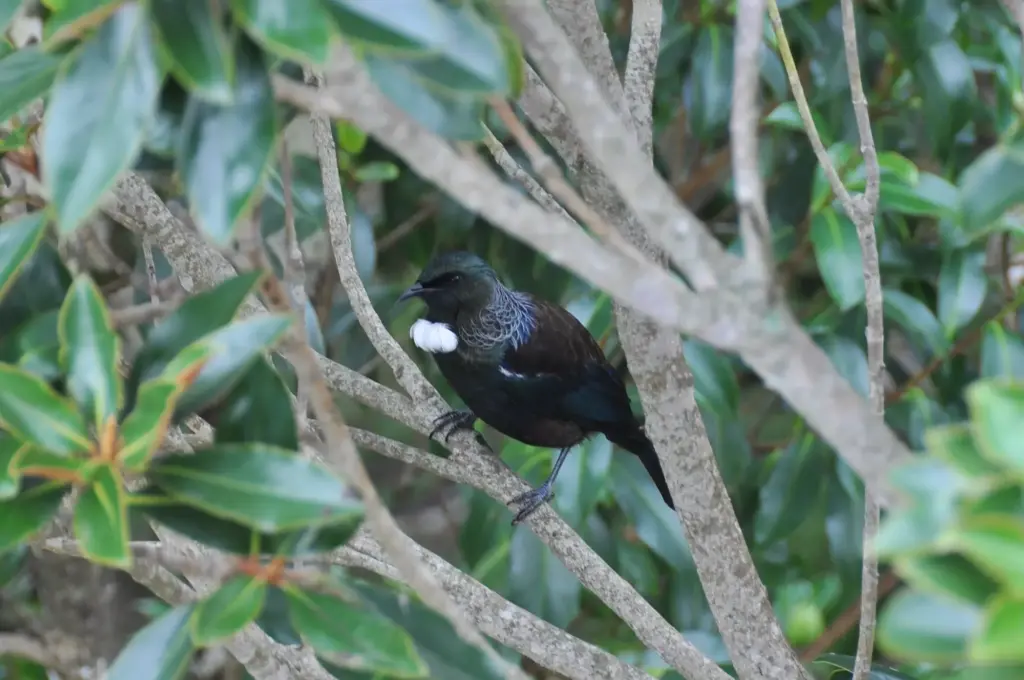
- Tūī: The most commonly counted endemic bird in Te Korowai o Waiheke’s annual count, with 580 spotted in 2021 compared with 479 in 2020. Its bubbling song is a big part of the island’s chorus.
- Kākā: A large native parrot and one of Waiheke’s biggest conservation wins. The latest Great Waiheke Kākā Count recorded a record 1,825 birds.
- Kererū: New Zealand’s native pigeon and a vital seed disperser for large-fruited native trees. Widespread across Waiheke’s bush and gardens.
- Weka: Flightless and curious, with a growing presence at the eastern end of the island.
- Riroriro / Grey Warbler: A tiny insect-eater heard far more often than seen, with a distinctive trilling song. It is the main host of the shining cuckoo.
- Pīwakawaka / Fantail: One of Waiheke’s most visible birds, with numbers rising notably between the 2020 and 2021 counts. It flits around walkers to catch the insects they disturb.
- Moho Pererū / Banded Rail: A wetland bird, with the Whakanewha wetland known to support it.
- Pūkeko: A native swamphen that thrives on open farmland and wetland edges, Abundant and easy to spot.
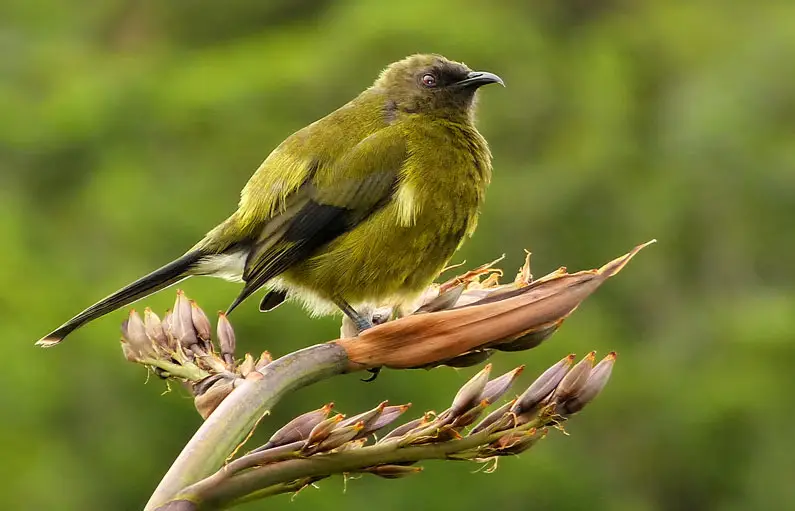
- Korimako / Bellbird: Bellbirds were released at Whakanewha Regional Park in 2010 as part of a Hauraki Gulf translocation.
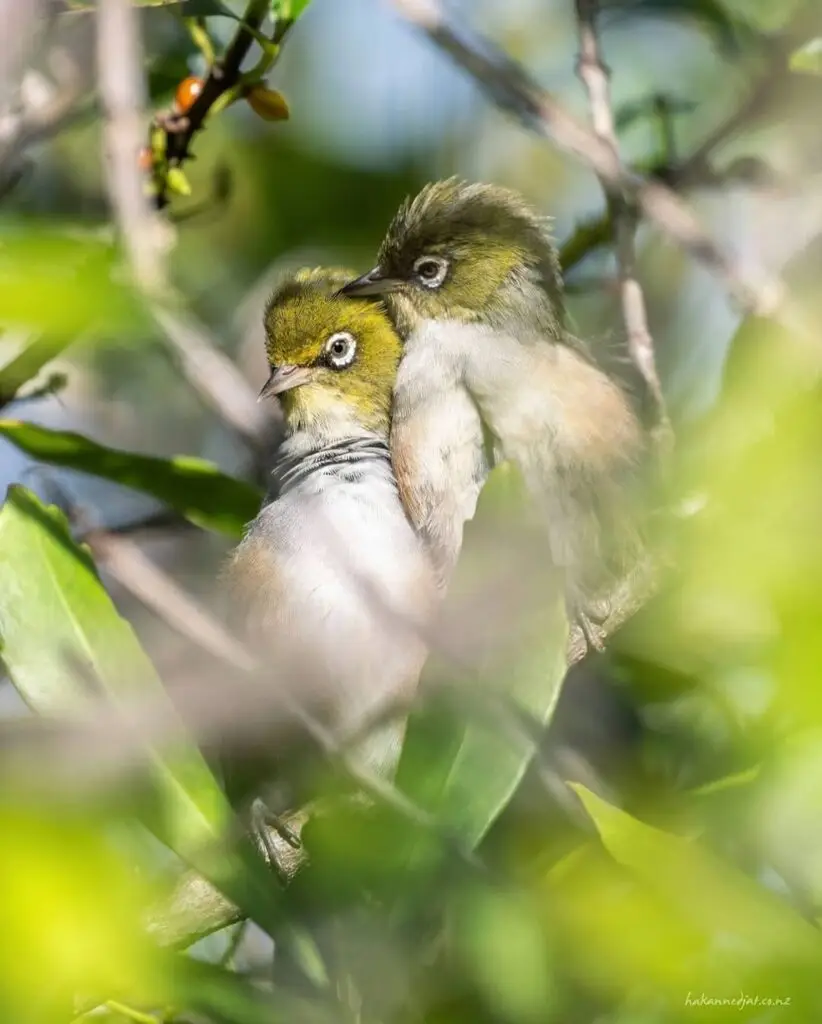
- Tauhou / Silvereye: A small, social, white-ringed bird.
- Pīpīwharauroa / Shining Cuckoo: A summer migrant that arrives each spring from the Solomon Islands to lay its eggs in grey warbler nests.
- Pāteke / Brown Teal: Once wiped out from most of New Zealand and brought back through captive breeding and releases. Listed among the protected species already living on Waiheke.
Shore and sea birds:
- Banded dotterel: A small wader that breeds inland in the South Island and migrates north in winter. Recorded in smaller numbers at Te Matuku.
- White-fronted tern: A coastal tern recorded at Te Matuku and along the Whakanewha coast. Look for it diving for small fish.
- Tōrea Pangoa / Variable Oystercatcher: A black, endemic oystercatcher. The west end of Onetangi Beach is an important roosting and breeding site, and dogs must be leashed there during the season.
- Tūturiwhatu / Northern New Zealand Dotterel: A few pairs breed on Waiheke, then flock at the western end of Blackpool Beach in autumn and winter.
- Kuaka / Bar-tailed Godwit: A long-distance migrant that flies from Alaska to spend summer on New Zealand’s mudflats. Among the most common shorebirds at Te Matuku.
- South Island Pied Oystercatcher: Breeds in the South Island and winters on northern harbours and estuaries. Listed along the Whakanewha coastal margin and common at Te Matuku.
- Tarānui / Caspian Tern: The world’s largest tern, seen along the Whakanewha coast. Look for its heavy red bill.
- White Faced Heron: A grey heron that self-introduced from Australia in the 1940s, now widespread. Listed on the Whakanewha coastal margin.
- Kororā / Little Blue Penguin: The world’s smallest penguin, with colonies resident on Waiheke for as long as anyone can tell. They nest in rocky coastal spots around the island, including Matiatia, Oneroa and Onetangi.
- Ōi / Grey-faced Petrel: Nests can be found in many of Waiheke’s coastal areas. These ground-nesting seabirds are detected by monitoring dogs at a number of island locations.
- Parekareka / Spotted Shag: One of Auckland’s rarer seabirds, found on Waiheke and neighbouring Tarahiki Island.
Learning while birding
Our expert guides have a rich knowledge of Waiheke’s conservation story, and of the birds you’ll get to see. As you spot them, in the canopies or coastal cliffs, you’ll learn more about each bird, their levels of endangerment, behavioural patterns and migratory cycles. If you’re an avid birder or just want to learn more about Aotearoa’s flora and fauna, our guides have got you covered. Whether you’re a first-timer or seasoned birder, you’ll leave our premium experience with great sightings and new knowledge.
We love to share the birds of Waiheke with out guests. Contact us to find out more about our Waiheke Birding Tour and Waiheke Birding & Biking Tour or discuss creating a personalised private tour that includes birding.